

OYO EMPIRE: THE IMPERIAL CENTRE OF YORUBA CIVILIZATION AND THE HISTORICAL NETWORK OF OYO-DERIVED KINGDOMS
By: Engr. Adewuyi O.A (Registered Civil Engineer & Chartered Project Manager)
The historical significance of the Oyo Empire rests not merely on oral tradition, but on the convergence of archaeology, written records, European travel accounts, missionary literature, colonial archives and Yoruba historical traditions. Among the pre-colonial Yoruba political formations, Oyo developed an unmistakably imperial structure under the institution of the Alaafin, exercising political, military and economic influence over a wide geographical area and maintaining relationships of tribute, allegiance and military obligation with numerous subordinate and neighbouring territories.
For this reason, Oyo can legitimately be studied as one of the central political institutions through which the history and civilization of a substantial part of the Yoruba-speaking world became organized and historically documented.
OYO AND THE DOCUMENTARY RECORD
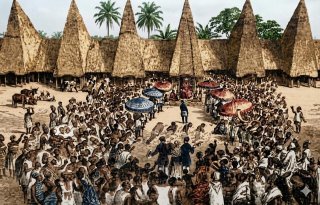
The existence and importance of the Oyo Empire are particularly well represented in the records of European travellers and later historical scholarship. One important external witness was Hugh Clapperton, whose journey brought him to Oyo-Ile in the 1820s. The Smithsonian Institution’s catalogue notes that Clapperton visited the old capital in 1826 and left observations concerning the royal court, the city and its cultural institutions.
Clapperton’s account is significant because it provides an external description of Oyo-Ile at a time when the imperial system was already experiencing serious political and military difficulties. His observations therefore constitute more than retrospective tradition: they are evidence from a European traveller who actually encountered the Oyo political centre.
The documentary record is complemented by subsequent historical works, missionary writings, colonial administrative records and scholarly research. Modern scholarship describes the consolidation of the Alaafin’s political authority in the late seventeenth century and the consequent expansion of Oyo influence across Yoruba history.
The historical importance of Oyo therefore does not depend upon a single source. It emerges from the convergence of written documentation, archaeology, oral traditions and the testimony of external observers.
THE ALAAFIN AND THE IMPERIAL GEOGRAPHY OF OYO
The political importance of the Alaafin becomes particularly apparent when the geographical extent of Oyo’s influence is considered.
Historical scholarship describes the Oyo Empire at its height as an extensive political formation whose influence reached far beyond the immediate territory surrounding Oyo-Ile. Its western relationships extended toward the Dahomey region, while its imperial networks incorporated numerous Yoruba communities and connected Oyo to important commercial routes leading toward the Atlantic coast. Scholarship on Oyo’s economic foundations also identifies routes linking Oyo-Ile with the Dahomey region and other major commercial centres.
This was not simply territorial expansion. The empire operated through a combination of military power, tributary relationships, appointed representatives, local rulers and commercial networks. Consequently, the historical map of Oyo cannot be understood merely by looking at the location of its capital. Imperial authority frequently operated through subordinate or allied political centres separated from Oyo-Ile by considerable distances.
This distinction is important when considering traditions from communities such as Apomu, Modakeke and other settlements whose histories preserve connections with displaced Oyo populations or the wider Oyo political order.
APOMU AND THE REACH OF OYO AUTHORITY
The history surrounding Apomu Market provides an especially important illustration. Academic research published by Indiana University Press discusses the Apomu episode during the reign of Alaafin Abiodun and describes Apomu as an important commercial location within the Yoruba country. According to the study, the Alaafin issued instructions concerning activities around the market, with principal rulers in the area acting as intermediaries through whom the Alaafin’s directives were implemented. The author specifically identifies this arrangement as an example of the political structure through which Oyo exercised influence beyond its metropolitan centre.
This evidence is particularly valuable because it demonstrates that the relationship between Oyo-Ile and distant communities was not merely a matter of modern retrospective interpretation. There were historical circumstances in which the Alaafin’s authority was understood and exercised across considerable geographical distances.
The traditions associated with Apomu consequently deserve examination alongside documentary evidence rather than dismissal simply because they originate partly from oral historical transmission.
OYO ANCESTRY AND THE FORMATION OF LATER COMMUNITIES
The collapse of the Old Oyo political system in the nineteenth century did not mean the disappearance of Oyo people, institutions or cultural influence. Instead, wars and political upheavals produced extensive population movements.
Modakeke provides one important example. Historical accounts associate its emergence with displaced Oyo populations following the nineteenth-century collapse of the Oyo Empire. The available historical literature records the movement of Oyo refugees and the establishment of new settlements during this period.
The significance of such communities is therefore not simply geographical. Their traditions preserve memories of the movement of Oyo people, the transmission of Oyo institutions and the re-establishment of Oyo-derived communities outside the old imperial capital.
This phenomenon should be understood as part of a larger historical process: the political dissolution of an empire can produce the geographical expansion of its people and cultural institutions rather than their disappearance.
THE TESTIMONY OF TRADITIONAL INSTITUTIONS
The oral testimonies attributed to traditional rulers from Apomu,Arigidi Akoko (Ondo State), Iperu-Remo (Ogun State), Akesan (Lagos State), the Igbado/Ondo area, Modakeke and other communities are also relevant to this historical discussion.
Where such rulers identify the Alaafin as historically occupying a superior position within the Yoruba political order, their testimony should be treated as oral historical evidence. It is, however, distinguished from independently documented archival evidence. Oral testimony is strongest when it can be compared with written records, archaeological findings and other independent historical sources.
The reported traditions concerning the Alaafin’s authority over distant communities therefore provide an important research question:
Why did communities located many days’ journey from Oyo-Ile preserve traditions associating their political history with the Alaafin and Oyo?
The answer requires careful historical investigation rather than the automatic dismissal of such traditions.
The documentary evidence concerning Apomu already demonstrates that Oyo’s political influence could operate through distant traditional authorities. Likewise, the history of Modakeke demonstrates the substantial movement of Oyo populations following the collapse of the imperial state.
OYO AS A CIVILIZATIONAL CENTRE
The expression “heartbeat of Yoruba civilization” can therefore be understood in a historical—not merely rhetorical—sense.
Oyo developed an elaborate political system, a powerful cavalry and military organization, extensive commercial networks, royal institutions, artistic traditions and religious institutions. The Smithsonian’s documentation, for example, records the continuing importance of Sango traditions, Oyo royal culture, Egungun traditions and other cultural practices associated with Oyo and areas under its historical influence.
The imperial capital itself was an enormous political and commercial centre. Clapperton’s observations provide an important contemporary description of Oyo-Ile during the final phase of the empire, while archaeological evidence provides additional testimony concerning the scale and organization of the old capital.
Oyo’s historical importance consequently extends beyond the identity of one city. It concerns an imperial civilization whose political, military, commercial and cultural networks connected numerous communities.
OYO, DAHOMEY AND THE WIDER WEST AFRICAN NETWORK
Oyo’s historical influence also extended beyond the immediate Yoruba heartland.
Historical studies document Oyo’s relations with the Dahomey region and the commercial routes connecting Oyo-Ile to the Atlantic economy. The empire’s western sphere of influence was therefore part of a broader West African political and commercial system.
This does not mean that every community across this enormous geographical area should be described as an Oyo settlement or as ethnically Oyo. Such a conclusion would go beyond the evidence. Rather, it demonstrates that Oyo operated as an imperial power whose political and economic relationships crossed ethnic, linguistic and regional boundaries.
That distinction is essential to responsible historical scholarship.
EMPIRE BEFORE DISINTEGRATION
The nineteenth-century fragmentation of Oyo should not be confused with the non-existence of the empire.
Indeed, the very fact that historians can trace the weakening, fragmentation and eventual collapse of Oyo-Ile demonstrates that there was an identifiable political structure that underwent decline.
By the time Clapperton reached Oyo-Ile, the empire was already under severe pressure. Historical accounts place the collapse and abandonment of the old capital in the 1830s.
The subsequent emergence or strengthening of numerous independent political communities therefore represents, in historical terms, the aftermath of imperial disintegration, not proof that the imperial structure never existed.
OYO EMPIRE DAY AND HISTORICAL COMMEMORATION
Against this background, the proposed OYO EMPIRE DAY, 17–19 December 2026, can be understood as a cultural and historical commemoration of Oyo’s imperial heritage.
Such a commemoration can provide an opportunity for descendants of Oyo communities, Oyo-derived settlements and historically connected kingdoms to examine their shared heritage through documentary research, archaeology, oral history, genealogy, anthropology and archival scholarship.
The objective is not to erase the histories of other Yoruba communities. Rather, it is designed to preserve and properly document the historical contribution of Oyo and the communities that emerged from, interacted with or were historically connected to the Oyo imperial system.
CONCLUSION
The historical case for Oyo Empire does not stand upon one oral tradition or one modern interpretation. It rests upon multiple categories of evidence: the old capital of Oyo-Ile, archaeological remains, European travel accounts including Hugh Clapperton’s observations, historical scholarship, colonial documentation, commercial records and enduring Yoruba oral traditions.
The histories of Apomu, Modakeke and other communities provide additional avenues for investigating the geographical reach of Oyo political authority and the subsequent dispersal of Oyo populations.
Consequently, discussion of Oyo Empire should be conducted through evidence rather than historical polemics. Where claims are disputed, the appropriate response is more archival research, more archaeological investigation, more documentation of oral traditions and careful comparison of sources. The historical record already establishes that Oyo was a major pre-colonial imperial power. Its political institutions, military organization, commercial networks and cultural influence constitute an important chapter in the history of the Yoruba-speaking world and West Africa.
OYO EMPIRE DAY — 17TH–19TH DECEMBER 2026
A commemoration of the historical memory, civilization, institutions, migrations and enduring heritage associated with Oyo Empire and its descendants and historically connected communities.
Authored: by Engr. Adewuyi O.A
(Registered Civil Engineer & Chartered Project Manager)
